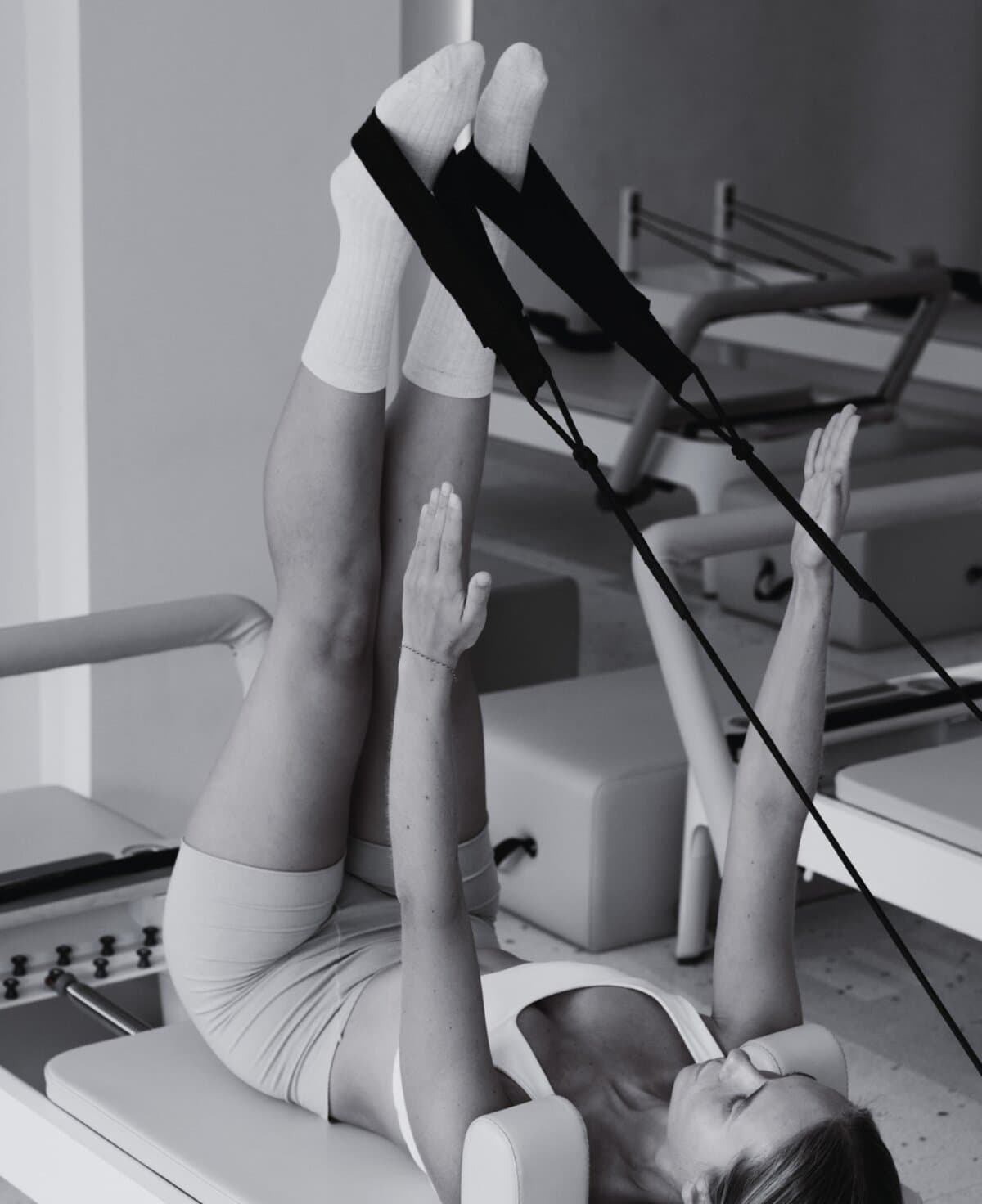
Mat or reformer? Picking the Pilates style that fits you
Both build the same habits (control, breath, precision), but they land differently in your space, your budget, and your body.
Mat and reformer share the same principles, but one uses bodyweight and gravity and the other adds springs and a carriage. Neither is better. They just ask different things from you and from your living room.
Mat work
You are the resistance. It is easy to set up at home, easy to travel with, and it scales from basics to pretty spicy flows without extra machinery.
A lot of people start here to learn a neutral spine and how to fire the core before they ever touch a reformer.
Reformer work
The carriage and springs add load and support in different ranges. That can make hard movements feel possible early on, then sneak up on your stability as you get stronger.
You will need the right setup, in a studio or at home. If the class is online, ask what the teacher expects you to have in frame before you book.
Choosing in real life
If you want the smallest footprint, mat is the obvious pick. If you love tinkering with resistance and you have access to a machine, reformer adds a lot of texture.
Plenty of people mix both: mat when life is crowded, reformer when they are in the studio or have the gear ready.
Ready when you are
Book live Pilates and yoga with instructors on TryFlowly.