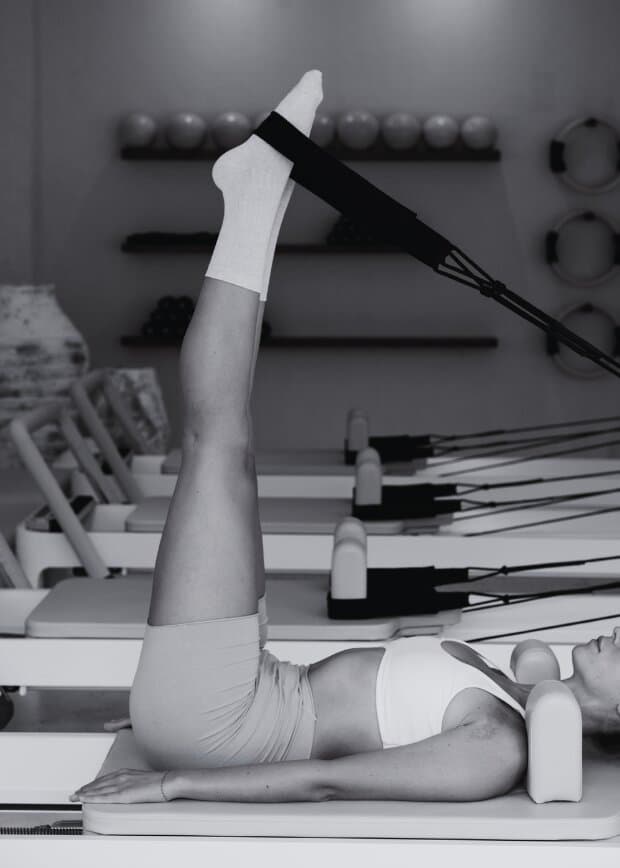
What Pilates tends to train besides your “core”
Posture you notice at your desk, hips that cooperate when you bend, and patience with small movements that add up over months.
People say Pilates for the abs, then stay for how their back feels when they stand up from a chair. The work is precise and a little quiet, which is why the benefits sneak up on you instead of arriving in one dramatic week.
Stability you use outside the studio
A lot of Pilates is about controlling your trunk while your arms and legs move. That shows up when you reach for a heavy bag, twist to grab a seat belt, or pick something off the floor without bracing like you are about to lift a car.
You are not chasing exhaustion every session. You are building coordination between deep muscles and breath so ordinary tasks feel less dramatic in your spine.
Posture without the stiff “stand up straight” lecture
Good cues in class sound like length through the crown of the head, weight balanced across your feet, ribs that are not flaring just to look taller. Those ideas translate to how you sit through a long meeting or scroll on your phone with less collapse.
Over time, students often report fewer tension headaches or less tightness between the shoulder blades, not because Pilates erases stress, but because they are not holding the same shape all day without noticing.
Patience that doubles as mental training
Pilates rewards showing up, not grinding. Small springs, small ranges, lots of repetition with attention. That mindset spills into sleep, recovery, and how you talk to yourself when progress is slow.
If you like measurable wins, track how long you can hold control in a hard shape, or how smooth a transition feels month over month, not only the mirror.
Ready when you are
Book live Pilates and yoga with instructors on TryFlowly.